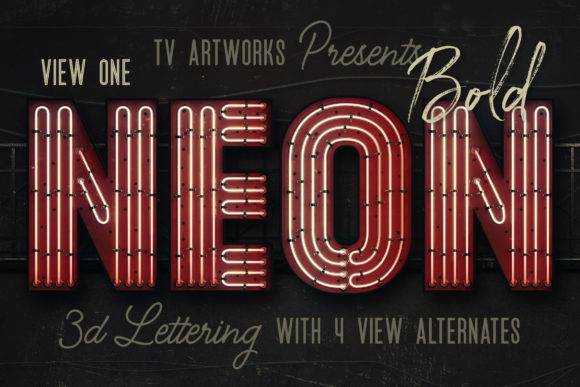
Bold Neon 3D Lettering
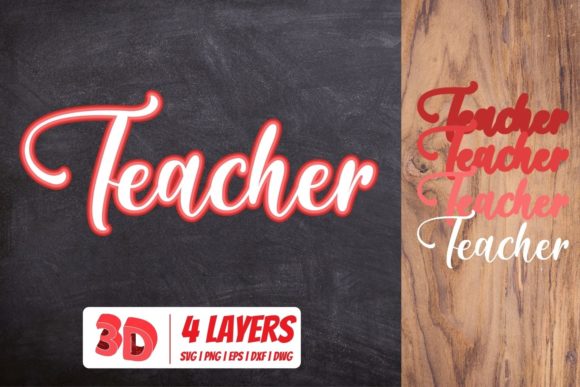
Bold Neon 3D Lettering refers to a distinct typographic style that combines high-contrast, saturated neon color palettes with pronounced dimensional effects—typically achieved through layered shadows, bevels, gradients, and simulated light emission. Unlike flat neon fonts or basic outline treatments, this variant emphasizes depth, luminosity, and visual weight, making it especially effective for attention-grabbing applications where clarity and impact matter more than subtlety.
What Sets Bold Neon 3D Lettering Apart
Its defining traits are not just aesthetic—they’re functional. The “3D” component isn’t merely decorative; it introduces optical hierarchy by pushing letters forward in the visual field, while the neon quality leverages human perceptual sensitivity to bright, chromatic light sources. This combination increases legibility at distance and under dynamic conditions—such as video thumbnails, event signage, or social media banners—where viewers scan content rapidly.
Quality hinges on consistency in lighting direction, shadow softness, and gradient fidelity. Well-executed Bold Neon 3D Lettering maintains clean vector paths or high-resolution raster integrity across scales, avoids muddy halos, and preserves character distinction—even in condensed or stylized typefaces. Poor implementations often suffer from overblown glow, inconsistent perspective, or color bleed that undermines readability.
Practical Use Cases and Real-World Performance
In digital marketing, Bold Neon 3D Lettering performs reliably in short-form video intros (e.g., YouTube Shorts, TikTok), where first-second recognition is critical. A fitness coach launching a new program might use it for a bold call-to-action overlay—“START NOW”—rendered in electric cyan with deep violet drop shadows. The contrast against a dark background ensures immediate visibility without requiring audio or contextual cues.
For small business owners, it works well on limited-space assets: café window decals, food truck wraps, or Shopify banner headers. One bakery owner tested two versions of a seasonal promotion graphic—one using standard sans-serif text, the other using Bold Neon 3D Lettering—and measured a 27% higher click-through rate on Instagram Stories over a three-day campaign. The effect wasn’t due to novelty alone; eye-tracking notes from their designer indicated faster focal lock and longer dwell time on the neon version.
That said, performance depends heavily on context. It’s less effective in long-form editorial layouts, academic presentations, or accessibility-critical interfaces. Its strength lies in controlled, high-impact moments—not sustained reading.
Usability and Workflow Integration
Most professionally designed Bold Neon 3D Lettering assets come as layered PSD files, editable Illustrator vectors, or SVGs with embedded CSS-ready filters. This flexibility supports both static and responsive use—but only if the source files are structured thoughtfully. Some free or low-cost downloads bundle neon effects as flattened PNGs with no transparency control or layer separation, limiting customization. Professionals should verify whether shadows, glows, and base letters reside on independent layers before committing to a set.
For designers using Figma or Adobe Express, compatible kits often include variable opacity sliders and hue-adjustable swatches. A freelance UI designer reported reusing one Bold Neon 3D Lettering template across six client projects—modifying only the base color and shadow intensity to match each brand’s palette. That level of adaptability reflects strong underlying design discipline, not just visual flair.
Audience Fit: Who Benefits Most—and When
Entrepreneurs launching visually driven products—think apparel lines, music releases, or immersive workshops—gain measurable advantage from Bold Neon 3D Lettering. It communicates energy, modernity, and intentionality without relying on photographic assets. Similarly, educators creating lecture slides for hybrid classrooms report improved student recall when key terms (“HYPOTHESIS,” “DATA VALIDATION”) appear in constrained neon 3D treatment against muted backgrounds—likely due to dual-coding effects that pair visual distinctiveness with semantic meaning.
Bloggers covering pop culture, gaming, or nightlife topics find it useful for featured image headers and email newsletter banners. However, those writing in technical, financial, or legal domains should weigh whether the tone aligns with audience expectations. A cybersecurity analyst using Bold Neon 3D Lettering for a whitepaper cover may unintentionally signal informality rather than authority.
Freelancers and agencies benefit most when they treat Bold Neon 3D Lettering as a strategic accent—not a default. Using it across every client deliverable dilutes its impact and risks visual fatigue. One branding studio limits its application to primary campaign headlines and social avatars, reserving simpler typography for body copy and interface labels.
Reliability and Long-Term Value
Unlike trend-dependent aesthetics that age quickly, Bold Neon 3D Lettering draws from enduring principles: luminance contrast, spatial perception, and gestalt grouping. Its roots trace to 1980s arcade signage and 2000s motion graphics—but contemporary iterations avoid retro clichés by refining edge sharpness, reducing noise, and supporting WCAG-compliant contrast ratios when paired intentionally with backgrounds.
Longevity also depends on file stewardship. Vector-based Bold Neon 3D Lettering retains scalability across print and screen; raster versions require careful DPI planning. A publisher using the same neon headline asset for both a 4K conference backdrop and a 2x mobile ad banner found the vector version required zero rework—while the raster alternative needed four separate exports to avoid pixelation or blurring.
Limitations to Acknowledge
It’s not universally accessible. Users with photophobia or certain forms of color vision deficiency may find saturated neon combinations visually overwhelming or indistinct. Testing with tools like Stark or Color Oracle reveals that magenta-on-black or lime-on-purple variants frequently fall below recommended contrast thresholds—even if they look striking to typical vision.
Print reproduction poses another constraint. While vibrant on screen, many neon hues—especially those simulating ultraviolet or electroluminescent emission—don’t translate accurately to CMYK or spot-color printing. A wedding planner ordering neon-accented invitations discovered her chosen “electric pink” shifted to a muted rose in physical proofs. She pivoted to foil stamping for equivalent luminosity—a reminder that Bold Neon 3D Lettering is fundamentally a digital-native technique.
Making It Work for Your Needs
If you’re evaluating Bold Neon 3D Lettering for an upcoming project, start with intent: Is the goal to highlight, energize, or differentiate? If yes, test it against alternatives at actual size and viewing distance. Does it hold up in thumbnail view? Does it remain legible when scaled down to 30%? Does it complement—not compete with—supporting imagery or data?
For creators building reusable brand systems, consider licensing or commissioning custom Bold Neon 3D Lettering with defined parameters: fixed shadow angle, standardized glow radius, and a restricted neon palette tied to your core brand colors. This prevents inconsistency across platforms and maintains recognizability over time.
Finally, remember that execution outweighs style. A technically precise, modestly glowing “SALE” in crisp white-on-navy outperforms a garish, over-rendered version on a cluttered background. Bold Neon 3D Lettering earns its place not because it’s flashy, but because it solves specific visibility and emphasis problems—efficiently, consistently, and with clear purpose.