Lollipops Vintage 3D Vector Alphabet Set
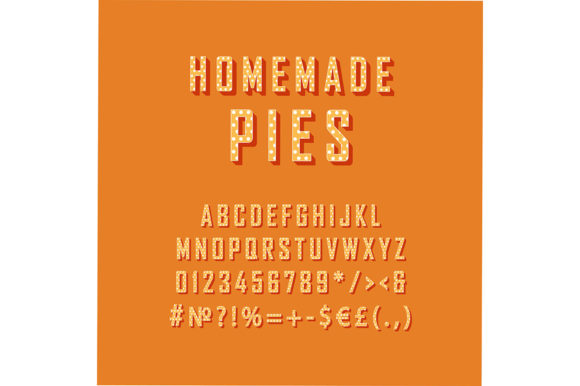
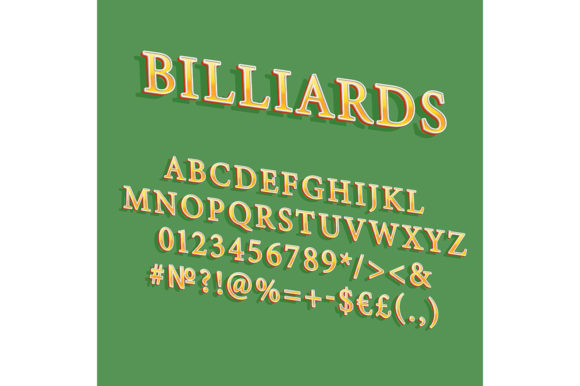
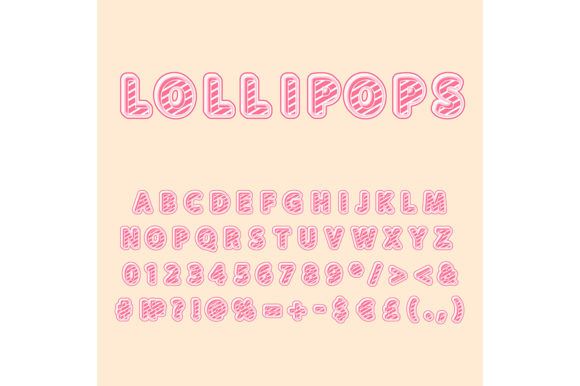
The Lollipops Vintage 3D Vector Alphabet Set is a curated collection of uppercase letterforms designed with deliberate retro sensibility and precise vector craftsmanship. Unlike mass-produced display fonts or generic 3D text generators, this set delivers hand-crafted, scalable glyphs—each letter modeled as an independent, layered vector object with consistent depth, lighting, and surface treatment. It’s not a font file you install and type with; it’s a design asset library intended for deliberate placement, customization, and integration into branding, packaging, editorial layouts, or digital campaigns where visual distinction matters.
What Makes This Set Stand Out in Practice
Three characteristics define its utility: intentional vintage styling, true 3D vector construction, and modularity. The “vintage” here avoids cliché—it leans into mid-century American signage and European enamel typography rather than distressed grunge or overused sepia filters. Letters feature subtle bevels, soft ambient shadows, and gentle gradient fills that suggest physical volume without overwhelming detail. Because each glyph is built in vector (AI/EPS/SVG), scaling to billboard size or shrinking to app icon dimensions introduces no pixelation or rendering artifacts—a key reliability factor for professionals managing multi-channel assets.
Modularity means letters aren’t locked into fixed kerning or spacing. You can adjust distance, layer order, shadow offset, or even recolor individual segments (front face, side plane, top bevel) without breaking integrity. This supports iterative refinement—something static fonts or raster-based 3D text cannot accommodate. In real-world use, that translates to faster mockup revisions for client presentations, easier adaptation across brand guidelines, and smoother handoff to print vendors who require clean, separated vector layers.
Quality and Consistency Across the Set
Examining all 26 uppercase letters reveals tight consistency in perspective angle (roughly 30° elevation), depth ratio (approx. 1:4 front-to-depth proportion), and light direction (upper-left, 45°). No letter feels like an afterthought or outlier—‘M’ and ‘W’ maintain structural clarity despite complexity, while ‘O’ and ‘Q’ retain proportional roundness without flattening. Stroke weights are balanced: none appear visually heavier or lighter than others at standard sizes, avoiding the uneven emphasis common in stylized alphabets.
Files ship in multiple formats—AI (CC 2020+), EPS 10, and SVG—with organized layers labeled by component (e.g., “Base,” “Highlight,” “Shadow”). This isn’t just convenient—it reflects thoughtful preparation for collaborative workflows. Designers using Figma can import SVGs and retain editable paths; Adobe Illustrator users benefit from native layer structure for quick color swaps or export variations. There’s no embedded raster content, no ungrouped compound paths, and no hidden clipping masks—just transparent, production-ready vectors.
Where It Fits—and Where It Doesn’t—in Real Projects
This set shines in contexts where typography functions as a visual anchor rather than functional body text. Think: boutique coffee shop wall signage, limited-edition music album covers, artisanal product labels, or social media campaign headers targeting audiences aged 28–45 who respond to tactile, nostalgic cues without irony. A small-batch candle brand, for example, used the ‘L’, ‘O’, and ‘V’ glyphs to spell “LOVE” on their holiday packaging—recoloring each letter in muted terracotta, sage, and ochre, then exporting layered PDFs for spot-color printing. The result held up cleanly on matte kraft paper, something a raster-based alternative would have struggled with at scale.
It’s less suitable for long-form editorial work, UI interfaces requiring dynamic text resizing, or projects demanding lowercase letters, numerals, or punctuation. While some creators manually adapt glyphs for custom symbols (e.g., turning ‘C’ into a circular badge frame), that requires intermediate vector fluency—not a barrier, but a consideration for time-constrained freelancers or educators building classroom materials on tight deadlines.
Usability for Different Roles
Freelance designers appreciate the time saved in client-facing deliverables: presenting three color variants of the same wordmark takes minutes, not hours, because layers are pre-isolated and named. Small business owners find value in owning perpetual rights—no subscription, no attribution requirements—making it viable for logos, storefront decals, or merchandise without ongoing licensing overhead. Educators use individual letters in design fundamentals courses to demonstrate hierarchy, contrast, and spatial reasoning in 3D form—students dissect the vector layers to understand how light direction affects perceived depth.
For marketers, the set supports cohesive seasonal campaigns. One agency reused the alphabet across Q4 email headers, Instagram carousels, and printed promo cards—all maintaining identical shading, depth, and proportions. That consistency strengthened brand recognition more effectively than switching between fonts or effects across channels. Importantly, because the files are vector-based and lightweight (<1 MB per letter), they integrate smoothly into CMS platforms that accept SVG uploads, unlike heavy PSD or OBJ alternatives.
Practical Considerations and Limitations
There’s no built-in animation capability—these are static vectors, not rigged 3D models. If your goal is rotating 3D text for web banners or interactive prototypes, you’ll need to pair this set with CSS transforms or After Effects compositing, not rely on the files alone. Also, while the vintage aesthetic reads clearly at medium to large sizes, fine details (like subtle highlight gradients) diminish below 48 pt in digital displays—so avoid using single glyphs as tiny navigation icons or mobile app buttons.
Color flexibility is high, but the original palette leans warm and saturated. Swapping to monochrome or pastel schemes works well, but high-contrast neon or metallic finishes may require manual gradient adjustments to preserve legibility and depth perception. That’s not a flaw—it’s inherent to working with crafted vectors—but it does mean the set rewards moderate technical familiarity. Beginners will get usable results quickly; advanced users unlock deeper customization.
Long-Term Value and Workflow Integration
Unlike trending fonts that fade within a season, this set’s strength lies in its specificity. It doesn’t try to be everything—it solves a narrow problem exceptionally well: delivering authentic, production-grade vintage 3D lettering on demand. That focus supports longevity. A designer who purchased the set in 2022 continues using it across client work in 2024, citing its reliability across software updates and output formats. Its compatibility with both legacy and current vector tools (Illustrator, Affinity Designer, Inkscape) ensures it won’t become obsolete with the next major OS release.
Integration into existing workflows is frictionless. Many users store the glyphs in a dedicated CC Library or Figma asset page, dragging and dropping as needed. Others batch-export variants (outlined, grouped, recolored) for recurring uses—say, a set of black-on-white letters for invoices and a gold-on-navy version for premium packaging. That kind of repeatability compounds value over time, especially for solopreneurs managing multiple brands or educators preparing semester-long material kits.
If your work involves branding, packaging, editorial design, or any context where letterforms carry expressive weight—and you prioritize control, scalability, and stylistic cohesion over convenience-of-typing—the Lollipops Vintage 3D Vector Alphabet Set offers tangible, repeatable utility. It won’t replace your system font, but it may become the go-to solution when “just another font” falls short.