3D Mandala and Layered Mandala: Depth, Design, and Meaning in Modern Art and Practice
What Are 3D Mandala and Layered Mandala?
A 3D Mandala isn’t just a flat circle drawn on paper—it’s a dimensional expression of symmetry, balance, and sacred geometry brought into physical or digital space. Unlike traditional two-dimensional mandalas, a 3D Mandala incorporates height, depth, and perspective—often achieved through laser-cut layers, stacked acrylic, origami folding, or immersive VR environments. It invites viewers to walk around it, peer into its center from multiple angles, or even interact with its shifting shadows and reflections.
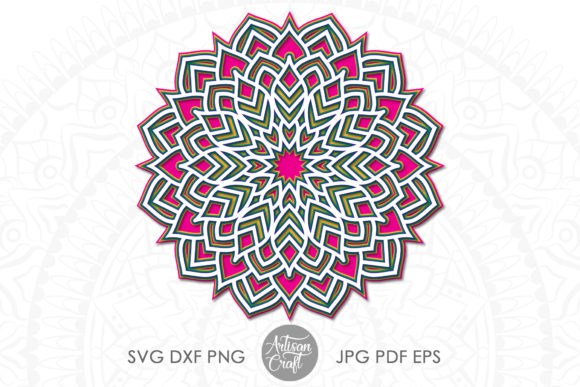
A Layered Mandala, while often serving as the structural foundation for many 3D Mandala designs, stands on its own as a distinct creative approach. It consists of multiple concentric or radial components—cut, printed, or assembled—that align precisely to form a cohesive whole when viewed frontally. Each layer may represent a different theme (e.g., earth, water, fire, air), a stage of personal growth, or a visual rhythm that deepens focus upon sustained viewing.
Though related, they’re not interchangeable: all 3D Mandalas are layered by necessity, but not all Layered Mandalas achieve true three-dimensionality. The distinction matters—especially when selecting one for meditation, interior design, education, or therapeutic use.
Why Depth Matters: Purpose and Psychological Resonance
Mandalas have long served as tools for centering attention and symbolizing wholeness. Adding dimension transforms that function. A 3D Mandala engages spatial awareness and peripheral vision, subtly activating parts of the brain associated with presence and orientation. Studies in environmental psychology suggest that objects with gentle visual complexity—and especially those with rhythmic layering—can lower cortisol levels and support mindful breathing.
A Layered Mandala supports similar outcomes but through a more accessible entry point. Its construction encourages patience and precision, making it popular in occupational therapy, classroom STEAM projects, and beginner art therapy. Teachers report students spending 25–40% longer on focused tasks after assembling a simple five-layer mandala template—likely due to the dual demand of pattern recognition and fine motor coordination.
Where These Forms Come Alive: Real-World Applications
From studios to schools, clinics to co-working spaces, both 3D Mandala and Layered Mandala formats find meaningful roles:
- Wellness Spaces: Yoga studios and mindfulness centers install wall-mounted Layered Mandalas as focal points during breathwork; some use rotating 3D Mandala sculptures near reception areas to ease visitor anxiety before appointments.
- Educational Tools: Middle school science teachers use transparent Layered Mandalas to demonstrate wave interference patterns; high school geometry classes build cardboard 3D Mandalas to explore rotational symmetry and tessellation in tangible form.
- Interior Design: Architects specify custom 3D Mandala room dividers for open-plan offices—they provide visual privacy without blocking light, and their repeating forms reduce perceptual “noise” in busy environments.
- Creative Entrepreneurship: Print-on-demand artists offer downloadable Layered Mandala files for crafters; laser-cutting services report a 60% year-over-year increase in orders for interlocking mandala kits—many used in wedding décor, retail window displays, and event backdrops.
Key Characteristics That Define Quality and Usefulness
Not every layered or dimensional design qualifies as a functional 3D Mandala or effective Layered Mandala. Look for these hallmarks:
- Intentional Alignment: Layers must register precisely—even slight misalignment breaks visual harmony and weakens meditative effect.
- Material Integrity: For physical pieces, materials should hold shape without warping (e.g., Baltic birch plywood over MDF; optical-grade acrylic over standard plastic).
- Scalable Repetition: Strong designs maintain clarity whether viewed from 1 foot or 10 feet away—critical for public installations.
- Adaptive Lighting Response: The best 3D Mandalas cast evolving shadows at different times of day or under directional lighting, adding organic variation without requiring user input.
Who Benefits Most—and When to Choose One Over the Other
Choose a Layered Mandala if you need:
- An affordable, portable tool for daily reflection (e.g., a 6-inch desktop version with removable layers you rearrange weekly).
- A tactile learning aid for neurodiverse learners who benefit from structured, sequential assembly.
- A customizable branding element—logos or taglines can be embedded within specific rings without disrupting symmetry.
Choose a 3D Mandala if you require:
- Architectural integration—like a ceiling-mounted piece that refracts light across a meditation floor.
- Interactive engagement—for example, a kinetic version where gentle airflow rotates outer layers, creating subtle motion that sustains attention without distraction.
- A signature statement piece for hospitality or healthcare settings, where first impressions impact emotional safety and perceived care quality.
Practical Considerations and Common Missteps
While both forms offer rich value, realistic expectations prevent frustration. A Layered Mandala is not inherently “easier” than a 2D version—it demands greater planning for spacing, material thickness, and shadow play. Likewise, a 3D Mandala isn’t automatically “more spiritual.” Its power comes from thoughtful execution—not just added depth.
Common oversights include:
- Overcomplicating layer count: More layers ≠ deeper meaning. Many impactful designs use only 3–5 thoughtfully differentiated strata.
- Ignoring ambient context: A highly reflective 3D Mandala may create glare under LED track lighting—test mockups in situ before finalizing.
- Assuming universality: Some cultural mandala traditions explicitly prohibit dimensional interpretation. Always research origins and consult practitioners when adapting sacred symbols.
Evaluating Suitability for Your Needs
Ask yourself these questions before investing time or resources:
- What’s the primary intention? Is it personal grounding? Group facilitation? Spatial enhancement? Each goal favors certain scale, material, and interaction modes.
- Who interacts with it—and how? A child’s classroom Layered Mandala needs rounded edges and washable surfaces; a corporate lobby 3D Mandala requires durable mounting and low-maintenance finishes.
- What’s your timeline and skill level? Digital designers can generate Layered Mandala SVGs in under an hour; hand-assembling a 12-layer walnut 3D Mandala may take 20+ hours—but yields heirloom durability.
- How will it age? UV-stable pigments matter for sunlit spaces; non-corrosive hardware is essential for humid climates or wellness rooms with essential oil diffusion.
Final Thought: Form Follows Feeling
At their best, both 3D Mandala and Layered Mandala do more than decorate—they orient. They offer visual anchors in a world of scrolling feeds and fragmented attention. Whether you’re sketching your first radial layout on graph paper or commissioning a site-specific 3D Mandala sculpture for a healing garden, the core principle remains unchanged: structure serves stillness. Depth invites discovery. And repetition, when intentional, becomes rhythm—and rhythm, in turn, becomes rest.
If you're exploring options, start small: print a free Layered Mandala template, cut two layers from contrasting cardstock, and observe how light shifts between them at different angles. That quiet moment of noticing? That’s where the practice begins.