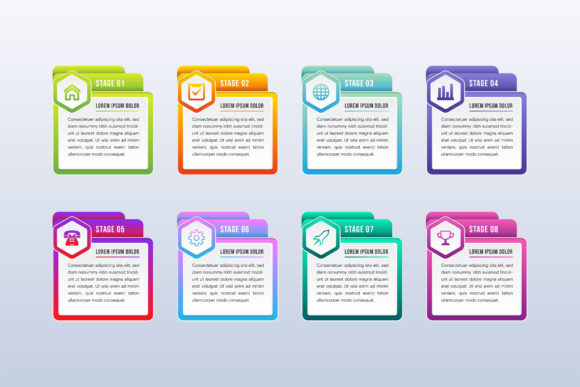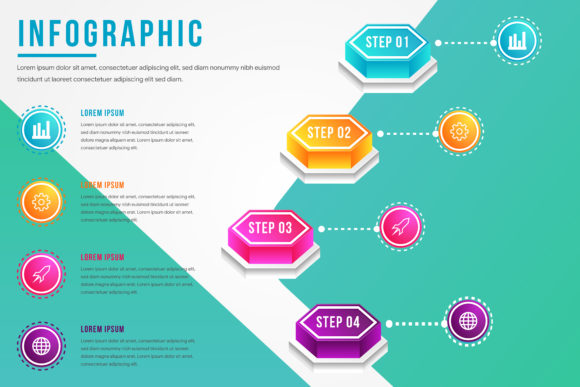
3D Hexagon Infographic: Clarity in Shape
A 3D hexagon infographic isn’t just a visual flourish—it’s a structural choice with purpose. The hexagon’s six equal sides and angles naturally suggest balance, connection, and interdependence. When rendered in three dimensions—adding depth, perspective, and subtle shading—it gains presence, hierarchy, and spatial logic. Unlike flat circles or rectangles, the 3D hexagon invites viewers to mentally rotate, explore relationships, and see how elements support one another. That makes it especially useful when explaining systems, frameworks, processes, or ecosystems where no single part stands alone.
Why This Shape Resonates Across Fields
Designers reach for the 3D hexagon when they need structure without rigidity. Educators use it to map learning outcomes that build on each other—not linearly, but reciprocally. Marketers apply it to visualize brand pillars that reinforce, not compete. Small business owners rely on it to clarify service offerings that intersect (e.g., consulting + training + tools). Even hobbyists adopt it to organize skill progressions—like learning guitar, where technique, theory, ear training, rhythm, improvisation, and repertoire all feed into one another.
The shape works because it avoids false binaries. A Venn diagram implies overlap; a flowchart implies sequence. A 3D hexagon says: These six things hold each other up—and their strength grows when seen together.
Creative Variations That Serve Real Goals
You don’t need advanced software—or even 3D modeling skills—to use this effectively. Start simple and scale intentionality:
- Flat-but-suggestive: Use layered shadows, gradient fills, and subtle bevels in tools like Figma or PowerPoint to imply depth without true 3D rendering.
- Modular stacks: Stack multiple hexagons vertically (like honeycomb layers) to show progression—e.g., beginner → intermediate → advanced competencies across six skill areas.
- Interactive web version: On a blog or portfolio site, embed an SVG-based 3D hexagon where hovering over each face reveals a short definition, icon, or stat—ideal for educators or SaaS onboarding.
- Print-friendly grid: Arrange six small 3D hexagons in a radial layout on a one-pager or workshop handout. Each contains one core principle, a brief example, and a QR code linking to deeper resources.
What matters isn’t photorealism—it’s clarity of relationship. A well-executed 3D hexagon infographic guides attention, supports memory, and reduces cognitive load by turning abstract connections into something visually graspable.
For Freelancers & Creators
Use a 3D hexagon to define your unique value proposition—not as a list of services, but as six interlocking strengths (e.g., research, writing, visual design, strategy, revision, delivery). Clients instantly understand how your process holds together. Bonus: animate one face at a time in a short Loom video to walk through your workflow—no jargon, just spatial storytelling.
For Educators & Trainers
Map curriculum standards or soft skills across six hexagon faces—then color-code each by Bloom’s Taxonomy level or real-world application (e.g., “collaborate,” “evaluate,” “create”). Print it as a poster. Pin it to your classroom wall. Refer to it weekly so students internalize how knowledge connects—not just what they’re learning, but how it fits.
For Marketers & Small Business Owners
Replace generic mission statements with a 3D hexagon showing your six non-negotiable commitments—say, sustainability, transparency, local impact, quality, accessibility, and responsiveness. Each face includes a concrete action (e.g., “100% plastic-free packaging” or “same-day reply guarantee”). It’s memorable, ownable, and harder to dilute than a paragraph of values.
Keeping It Effective—Not Just Eye-Catching
A 3D hexagon infographic fails when it prioritizes style over substance. Avoid these pitfalls:
- Overloading faces: Limit each hexagon face to one clear idea—a noun or verb phrase (e.g., “User Testing,” not “Comprehensive iterative user testing across multiple platforms with qualitative and quantitative analysis”).
- Inconsistent styling: If you use icons, make sure they share weight, perspective, and color treatment. Mismatched icons break the illusion of unity—even in 3D.
- Ignoring context: A glossy 3D render may look impressive on Behance—but won’t print clearly on a double-sided flyer. Design for the medium first, then enhance.
Test your version: Can someone glance at it for 8 seconds and recall at least four of the six ideas? If not, simplify. Trim adjectives. Replace paragraphs with verbs. Let the shape do the work of implying connection—you don’t need arrows or lines.
Ideas to Try This Week
- Redesign your bio: Swap your standard “I do X, Y, and Z” summary for a 3D hexagon showing your six foundational strengths—with one sentence per face.
- Clarify a team meeting: Before your next project sync, sketch a 3D hexagon on a whiteboard with the six key questions: What’s the goal? Who’s involved? What’s due? What’s blocked? What’s working? What’s next?
- Plan content: Map your next quarter’s blog topics across six hexagon faces—each representing a pillar theme (e.g., tools, case studies, tutorials, trends, interviews, reflections). See gaps before you write.
- Explain a complex tool: If you teach or sell software, use a 3D hexagon to show how its six core features interact—instead of listing them separately in a spec sheet.
None of these require new software. Most take under 30 minutes using free tools like Canva (with isometric shape templates), Google Slides (using rotation and shadow effects), or even pen and paper scanned and enhanced in Snapseed.
Originality Starts With Intention
You don’t need to invent a new shape to be original. You need to use an existing one with fresh purpose. The 3D hexagon infographic becomes distinctive not through novelty—but through fidelity to your message, audience, and medium. A freelance writer’s hexagon looks different from a university lab’s—because the relationships being shown are different. That’s the point.
So ask yourself: What six things only work well *together*? Where does hierarchy obscure more than it reveals? When would spatial logic help your audience see—not just read—how things connect?
Then build the hexagon—not as decoration, but as explanation.