Abstract 3D Shape Clipart Vol. 50: A Practical Evaluation for Designers and Educators
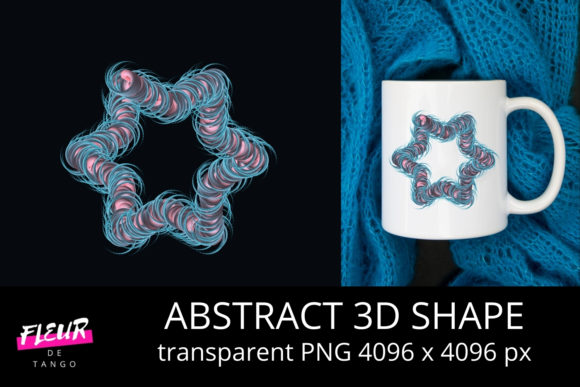
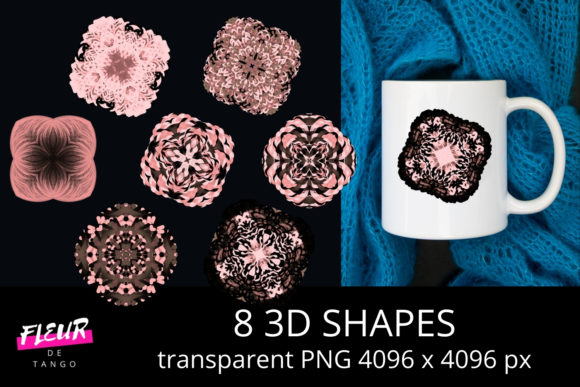
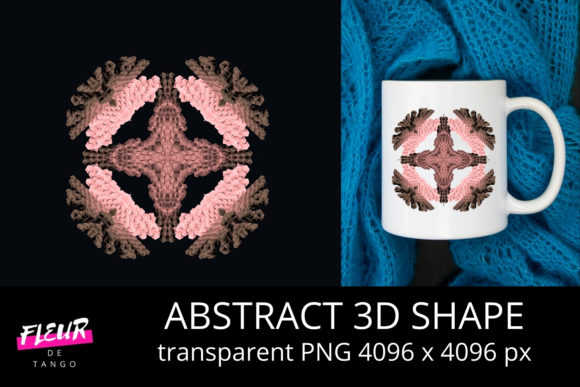
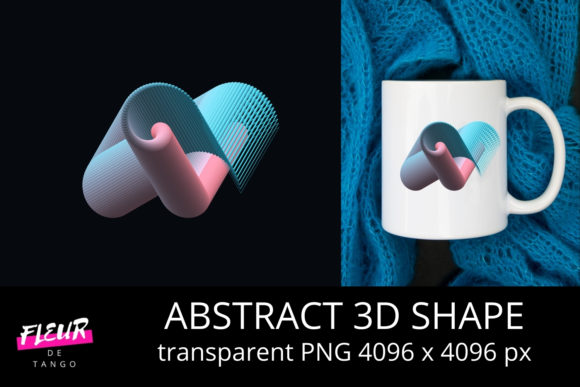
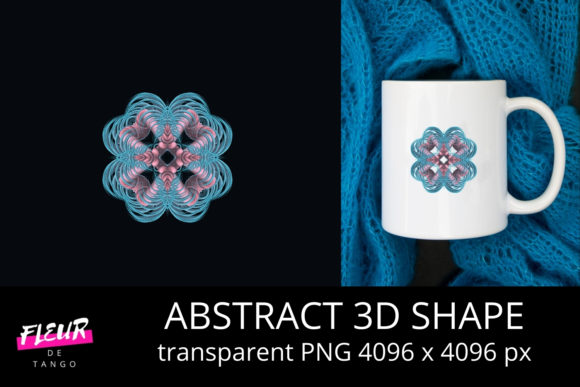
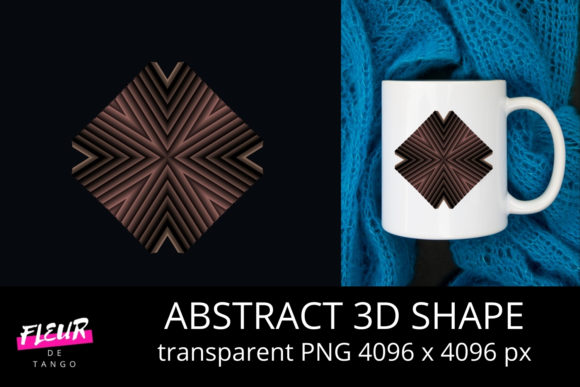
Abstract 3D Shape Clipart Vol. 50 is a curated digital asset collection featuring stylized, non-representational three-dimensional geometric forms—such as toroids, polyhedra, warped prisms, and volumetric gradients—rendered as scalable vector or high-resolution raster graphics. Unlike photorealistic 3D models or interactive assets, this volume delivers static, ready-to-use visual elements intended for integration into presentations, educational materials, branding projects, infographics, and UI mockups. It is part of an ongoing series, with Vol. 50 reflecting refinements in lighting consistency, color harmony, and silhouette clarity based on prior user feedback.
Individuals evaluating Abstract 3D Shape Clipart Vol. 50 typically fall into two broad groups: visual communicators (e.g., instructional designers, marketing specialists, and presentation developers) seeking expressive yet neutral visual metaphors; and educators or curriculum developers needing clear, non-distracting representations of spatial concepts—like symmetry, volume, or transformation—without the cognitive load of realistic textures or context-specific details.
The primary benefit lies in efficiency and stylistic cohesion. Each shape is pre-rendered with uniform lighting angles, consistent shading depth, and a restrained palette—often limited to 3–5 harmonized colors per set. This reduces time spent adjusting individual assets for visual alignment across slides, worksheets, or dashboards. Because the shapes are abstract, they avoid cultural or contextual associations that could distract from core content—making them especially useful in cross-disciplinary or multilingual settings. Additionally, most versions include both vector (SVG, EPS) and raster (PNG with transparent backgrounds) formats, supporting flexibility across print, web, and projection use cases.
However, tradeoffs exist. These are not parametric or editable 3D models: users cannot rotate, relight, or modify topology in real time. The abstraction also means they lack surface detail, material properties, or animation capability—limiting utility in immersive learning environments, AR/VR prototyping, or engineering visualization. File organization follows thematic groupings (e.g., “fluid volumes,” “angular constructs,” “layered solids”), but metadata is minimal; there is no built-in tagging by mathematical property (e.g., “Euler characteristic = 2”) or pedagogical application. Users requiring precise geometric labeling or measurement-based annotation must add those manually.
Considerations before acquisition include workflow compatibility and scalability needs. If your team relies heavily on Figma, Adobe XD, or PowerPoint, verify that included file formats integrate cleanly—particularly SVG support, which can vary in rendering fidelity across platforms. Also assess whether the volume’s aesthetic aligns with existing brand guidelines: while its minimalist approach supports neutrality, some users may find the soft gradients and subtle bevels insufficiently bold for large-format displays or low-resolution projectors. Licensing terms matter too: standard licenses permit internal use and client deliverables, but resale of unmodified assets or inclusion in template marketplaces usually requires an extended license.
Abstract 3D Shape Clipart Vol. 50 is a strong fit when the goal is rapid visual scaffolding—not simulation or instruction in 3D modeling itself. For example, a biology instructor illustrating cellular compartmentalization might use a nested toroidal shape to represent organelle layers without implying biological accuracy. A UX researcher could deploy subtly varied prism forms to distinguish data categories in a dashboard legend, relying on shape language rather than color alone for accessibility. Similarly, a corporate trainer building a change-management module may select warped-cube variants to symbolize structural adaptation—leveraging abstraction to invite interpretation rather than prescribe meaning.
Conversely, alternatives may be preferable in several scenarios. If your work demands interactivity—such as allowing learners to rotate a dodecahedron to examine vertices—a dedicated 3D library like Three.js or a platform like Sketchfab offers greater functionality. For technical illustration requiring precise dimensions, tolerances, or cross-section views, CAD-derived line art or ISO-standard geometric diagrams remain more appropriate. When developing open educational resources (OER), freely licensed alternatives—such as those from the Openclipart archive or CC0-licensed Blender-generated shapes—may better serve redistribution requirements, even if they offer less stylistic polish.
Decision-making hinges on matching asset characteristics to functional priorities. Ask: Is speed of implementation more critical than customizability? Does the audience benefit from ambiguity (e.g., encouraging conceptual discussion) or require precision (e.g., distinguishing between a rhombicuboctahedron and a truncated cube)? Will these visuals appear alongside other graphical elements—logos, photographs, icons—and how well do the provided lighting and contrast levels hold up in composite layouts?
Another practical insight: preview before committing. Many vendors offer sample packs containing 5–10 representative shapes from Abstract 3D Shape Clipart Vol. 50. Import those into your actual authoring environment—test scaling at 200% resolution, check transparency handling in slide masters, and overlay them against common background colors used in your templates. This reveals integration issues no product description can anticipate.
Also consider version continuity. Because Vol. 50 is part of a numbered series, earlier volumes may share compatible styling. If you already use Vol. 42 or Vol. 47, compare lighting direction, stroke weight consistency, and base color values. Minor discrepancies—such as a 5° shift in highlight angle—can undermine visual continuity across multi-volume projects unless consciously managed.
Finally, recognize that abstraction serves a specific communicative function: it simplifies without oversimplifying. Abstract 3D Shape Clipart Vol. 50 does not replace domain-specific visuals—it supplements them. Its value emerges not in isolation, but in how effectively it bridges conceptual intent and visual execution. That makes evaluation less about whether the assets are “high quality” in absolute terms, and more about whether their particular kind of quality—restrained, repeatable, and deliberately non-literal—supports your immediate communication goals.
In summary, Abstract 3D Shape Clipart Vol. 50 suits users who prioritize visual efficiency, stylistic consistency, and conceptual openness over technical specificity or interactivity. It is neither a substitute for 3D modeling software nor a universal solution—but for targeted applications in education, presentation design, and information architecture, it offers a pragmatic, well-executed resource worth evaluating alongside alternatives based on concrete workflow needs.