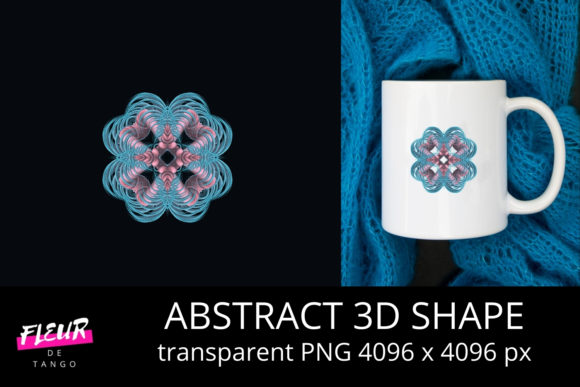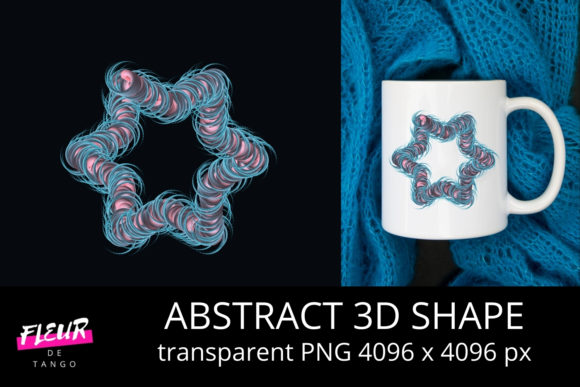
Abstract 3D Shape Clipart Vol. 45: A Practical Evaluation for Designers and Educators
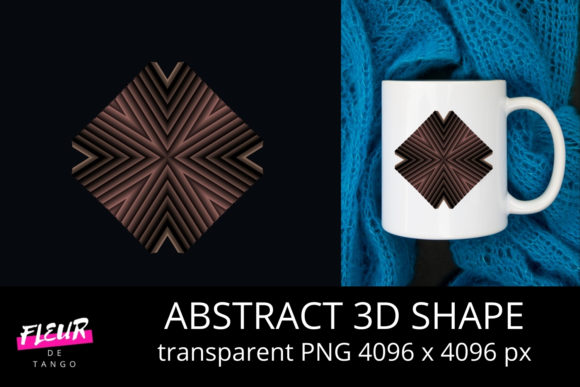
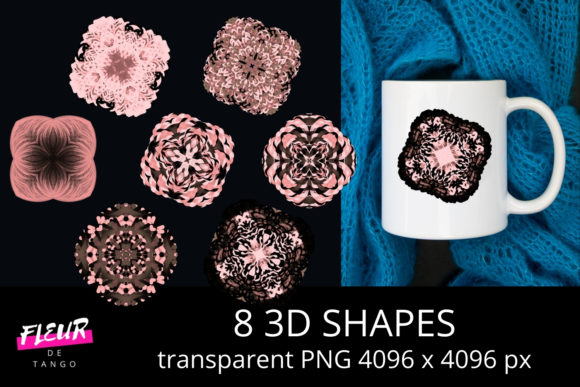
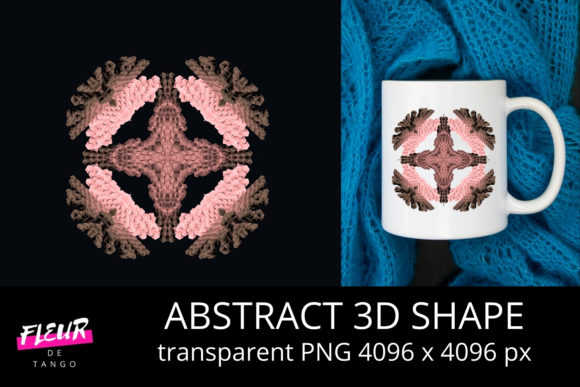
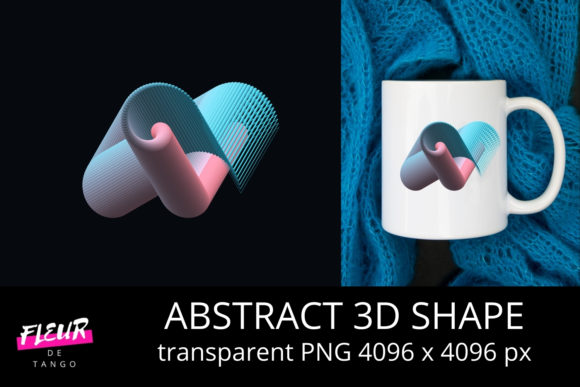
Abstract 3D Shape Clipart Vol. 45 is a curated digital asset collection featuring scalable vector illustrations of non-representational, geometric 3D forms—such as toroids, polyhedral fragments, extruded curves, and layered volumetric silhouettes. Unlike photorealistic 3D renders or animation-ready models, this volume delivers stylized, simplified shapes optimized for clarity, flexibility, and integration into flat design workflows. It is distributed as a downloadable package containing SVG, EPS, and PNG files, with consistent color palettes and uniform line weights across all assets.
Who Might Consider Abstract 3D Shape Clipart Vol. 45?
This collection appeals primarily to professionals and educators who need clean, editable 3D-inspired visuals without the overhead of modeling software or licensing complexity. Graphic designers building infographics, UI/UX specialists prototyping spatial concepts, technical illustrators preparing schematics, and STEM educators visualizing geometric principles may find value in its ready-to-use forms. It is not intended for architects requiring precise parametric models, game developers needing real-time rendering assets, or motion graphics artists seeking rigged 3D objects.
Key Benefits: Clarity, Consistency, and Workflow Efficiency
The primary advantage of Abstract 3D Shape Clipart Vol. 45 lies in its intentional abstraction. Each shape avoids unnecessary detail while preserving volumetric readability—making them effective at small sizes and across varied backgrounds. Because all assets are vector-based, they scale infinitely without quality loss and support easy recoloring, layering, and alignment in tools like Adobe Illustrator, Figma, or InDesign.
Consistency is another strength. The set follows a unified visual language: subtle gradients suggest depth, uniform stroke weights reinforce cohesion, and negative space is deliberately balanced. This reduces time spent harmonizing disparate elements when assembling diagrams or presentations. For teams maintaining brand-aligned visual systems, the predictability of the collection supports faster iteration and clearer stakeholder communication.
Tradeoffs and Practical Considerations
Users should recognize inherent limitations. These are clipart, not true 3D models—so rotation, lighting adjustment, or perspective manipulation must be done manually via 2D transforms. There is no built-in interactivity, animation capability, or compatibility with 3D authoring environments like Blender or Unity. Additionally, while the collection includes over 120 unique shapes, it does not offer variations in material properties (e.g., metallic, translucent), surface textures, or dynamic shadows.
Licensing is permissive for most commercial uses—including internal reports, client deliverables, and printed materials—but excludes resale of the assets as standalone clipart or inclusion in competing asset libraries. Users working under strict compliance requirements (e.g., federal education publishers or regulated industries) should verify redistribution rights before embedding assets into publicly distributed templates or platforms.
When Abstract 3D Shape Clipart Vol. 45 Is a Strong Fit
This volume is especially well-suited for projects where conceptual clarity outweighs photorealism. For example:
- Educators illustrating topological relationships, symmetry operations, or spatial reasoning concepts in math or physics curricula;
- Instructional designers creating modular e-learning modules that require consistent iconography for abstract processes (e.g., data flow, system layers, feedback loops);
- Marketing teams developing presentation decks for enterprise software—using stylized 3D shapes to represent architecture layers (infrastructure, platform, application) without implying technical specificity;
- Information designers building scalable dashboards where icons must remain legible at multiple resolutions and contrast levels.
In these contexts, the efficiency of drop-in assets—and their ability to signal “three-dimensionality” without demanding rendering resources—supports focused communication.
When Alternatives May Be More Appropriate
If your work requires accurate spatial representation, consider parametric modeling tools (e.g., Tinkercad for beginners, Fusion 360 for precision) or royalty-free 3D model repositories like Sketchfab or TurboSquid. These provide editable geometry, camera controls, and export options for AR/VR deployment—capabilities beyond the scope of Abstract 3D Shape Clipart Vol. 45.
For animated explanations or interactive learning tools, SVG-based micro-animations or lightweight WebGL libraries (e.g., Three.js) offer greater dynamism. Similarly, if you need high-fidelity surface detail—such as realistic reflections, subsurface scattering, or environmental occlusion—rendered PNG sequences or HDR-compatible models will better serve those goals.
Finally, users already invested in comprehensive design systems (e.g., Figma community libraries or Adobe Stock’s customizable vector sets) may find overlapping functionality without needing a dedicated volume—especially if their use cases span broader categories beyond abstract geometry.
Making an Informed Decision
Before acquiring Abstract 3D Shape Clipart Vol. 45, assess three practical factors:
- Output medium: Will your final deliverable be static (PDF, slide deck, poster) or dynamic (web app, video, AR experience)? Static outputs align well; dynamic ones likely require more adaptable assets.
- Editing depth needed: Do you anticipate modifying perspective, light direction, or surface attributes frequently? If yes, vector clipart offers limited flexibility compared to editable 3D scenes.
- Volume and variety requirements: Review the official preview gallery. Does the included shape vocabulary match your domain-specific needs—e.g., toroidal forms for network topology, nested shells for hierarchical systems, or faceted volumes for material science? Gaps here may necessitate supplemental sourcing.
Also consider workflow integration. Because the assets are delivered in standard vector and raster formats, compatibility with common design tools is high—but users relying exclusively on browser-based editors with limited SVG import (e.g., Canva’s free tier) may encounter rendering inconsistencies or missing gradient support.
Final Perspective
Abstract 3D Shape Clipart Vol. 45 occupies a specific niche: it bridges the gap between flat iconography and full 3D modeling for communicators who prioritize speed, consistency, and conceptual fidelity over technical realism. Its value emerges not in isolation, but in how efficiently it supports clear visual storytelling—particularly when time, technical capacity, or stylistic constraints limit other options. Evaluating it alongside your actual project constraints—not idealized use cases—will yield the most reliable judgment about fit.