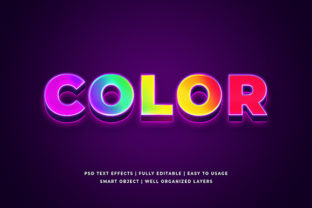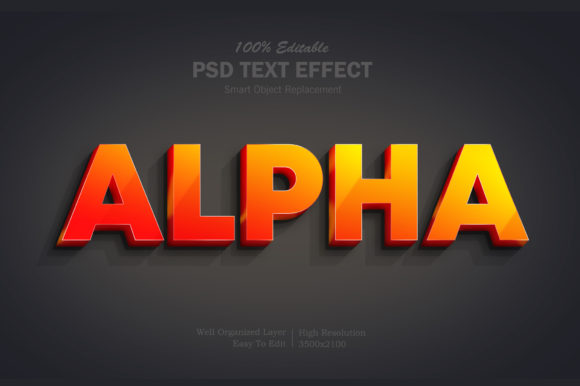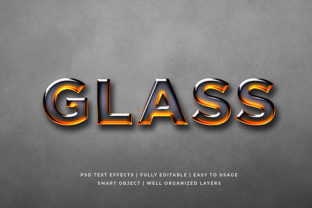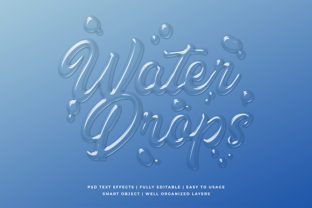
Special 3D Text Effect: When Typography Gains Depth—and Purpose
Typography no longer sits flat on the screen. A quiet but meaningful shift is underway: designers, marketers, educators, and even small-business owners are turning to Special 3d Text Effect not as a novelty, but as a functional tool—adding spatial clarity, visual hierarchy, and emotional resonance where plain text falls short. It’s not about gimmicks; it’s about intentionality. Whether you’re labeling an interactive dashboard, designing a workshop slide deck, or crafting a product landing page, depth in letterforms can guide attention, reinforce brand tone, and improve comprehension—especially in environments crowded with competing visual noise.
What Makes a Special 3D Text Effect More Than Just “Shiny”?
A Special 3d Text Effect goes beyond basic CSS text-shadow or layered duplication. It involves deliberate control over lighting angles, surface texture, perspective distortion, and material properties—like subtle bevels, metallic sheens, or soft ambient occlusion—that mimic how light interacts with real-world objects. Think of it as typographic modeling: giving letters volume, weight, and context. Unlike generic 3D filters that apply uniformly across fonts and sizes, a *special* implementation considers legibility at scale, contrast ratios for accessibility, and rendering performance across devices.
This distinction matters because users increasingly expect interfaces to feel tactile—even when they’re entirely digital. A button with carefully crafted depth cues signals interactivity more intuitively than one relying solely on color or animation. Similarly, a headline with restrained extrusion and directional lighting feels grounded, authoritative, and memorable—not just decorative.
Why Now? The Convergence of Tools, Expectations, and Workflows
Three practical developments have made Special 3d Text Effect more accessible and relevant than ever:
- Better browser support: Modern CSS properties like
transform-style: preserve-3d,backface-visibility, and hardware-acceleratedfilterfunctions now work reliably across Chrome, Safari, and Edge—reducing reliance on heavy JavaScript libraries or static image exports. - Design system maturity: Teams building reusable UI components increasingly include depth as a design token—just like spacing, typography scale, or color palettes. That means a Special 3d Text Effect isn’t applied ad hoc, but aligned with overall interface language (e.g., “elevated headings use 4px extrusion + 15° light source”)
- Rising demand for micro-engagement: With average attention spans tightening and scroll velocity increasing, subtle dimensional cues help anchor key messages. A study by the Nielsen Norman Group observed that users consistently fixate longer on elements with consistent lighting direction and perceived mass—especially when paired with clear typographic contrast.
None of this requires 3D modeling expertise. What’s changed is the threshold for thoughtful execution—not just “can we add depth?” but “should this text have depth, and what does that depth communicate?”
Real-World Applications—Beyond Banners and Logos
Consider how professionals actually use Special 3d Text Effect today:
- Educators embed lightly extruded labels in interactive science simulations—making molecular structures or circuit diagrams easier to parse spatially without cluttering the interface with arrows or legends.
- Freelance developers build custom React components that generate responsive 3D headings using CSS custom properties—so clients can adjust depth, lighting, and surface finish via a simple admin panel, not code edits.
- Local service businesses (e.g., boutique gyms, artisan bakeries) use subtle 3D text overlays on hero images—not for flash, but to ensure readability against busy backgrounds while reinforcing craft and substance in their brand voice.
- Nonprofit communicators apply soft, matte 3D treatments to impact statistics (“+42% literacy rates”) in annual reports—giving data visual weight without implying artificial precision or hype.
Notice the pattern: depth serves function first. It improves scannability, supports narrative framing, or resolves technical constraints (like low-contrast imagery). It rarely exists in isolation—it works alongside typography choice, whitespace, and motion design to form a cohesive experience.
Practical Considerations Before You Implement
Adopting a Special 3d Text Effect thoughtfully means asking three questions upfront:
- Does this enhance meaning—or distract from it? If your goal is fast scanning (e.g., navigation menus), avoid complex extrusions. Reserve richer effects for primary headlines, callouts, or data highlights where pause-and-process behavior is expected.
- Is it accessible by default? Test contrast between foreground text and its shadow/layered surfaces—not just against the background. Avoid effects that reduce character distinguishability (e.g., overly blurred edges or excessive layer stacking that blurs letterforms).
- Does it scale gracefully? A 3D effect that looks crisp at 48px may become muddy or unreadable at 18px on mobile. Use relative units (
em,rem) and media queries to simplify or flatten effects responsively—not just shrink them.
Also worth noting: performance isn’t theoretical. Heavy 3D transforms on large blocks of text can trigger layout thrashing or jank on mid-tier mobile devices. Lightweight CSS-based approaches typically outperform canvas- or WebGL-driven alternatives for most content-driven sites.
Looking Ahead: Depth as a Design Responsibility
The future of Special 3d Text Effect isn’t about chasing photorealism or cinematic flourishes. It’s about deepening our responsibility as communicators—recognizing that every visual decision carries interpretive weight. As AR interfaces, voice-first interactions, and adaptive UIs evolve, our understanding of “depth” will expand beyond Z-axis values into spatial audio cues, haptic feedback, and contextual layering. But the foundational principle remains unchanged: dimension should clarify—not complicate.
That means choosing a Special 3d Text Effect not because it’s possible, but because it answers a specific need: improving information hierarchy in a dashboard, reinforcing authenticity in a founder’s story, or helping learners mentally rotate abstract concepts. It’s typography with intention—and intention, not novelty, is what makes depth last.
Getting Started—Without Overcommitting
You don’t need a full 3D pipeline to begin. Start small:
- Use a single
text-shadowwithrgba()for soft depth (e.g.,text-shadow: 0 2px 6px rgba(0,0,0,0.15);)—clean, lightweight, and universally supported. - Experiment with
clip-pathand layered pseudo-elements to simulate beveled edges on key headings—no external libraries required. - Adopt a consistent light source angle (e.g., top-left at 135°) across all dimensional elements in your project. Consistency builds coherence faster than complexity.
- Review your effect in grayscale mode. If depth disappears entirely, it’s likely relying too much on color contrast instead of structural cues.
Remember: the most effective Special 3d Text Effect often goes unnoticed—not because it’s invisible, but because it feels inevitable. Like good typography itself, it serves the message, not the maker.